Saturday, December 09, 2006


Monday, December 04, 2006
December (not April) is the crueler month
December should be the happiest month of the year. Surely it is. Christmas is still a relevant day for me, even though the word “Christmas” is not political correct. They say “Holidays greetings” to not hurt any feelings. Poor baby Jesus.
Anyway, December reminds me of the passing of two great men I was lucky to meet and know, shortly, both. One is Joe Strummer. The Clash were for my generation what Bob Dylan was for the 60’s generation, and I was lucky enough to meet him for a damn funny interview one day. At a certain point while we were talking, he took away his boots and the girl who was with me told me: “He did something punk at least…”. Some months later, he was playing in my city. I never saw him or The Clash in concert. David Bowie was playing the same night in a small club. I thought, well, I could go see Joe next time, but David Bowie in a small club. I can’t miss it. There was never a second chance, because a few days before Christmas, Joe Strummer died.

The other man is the subject of the following story.
It was a cold December day when, excited by the news, I walked into that great concert hall with the hope of finally meeting Rick Danko for the first time in my life. He was a true musical hero for me. The music of The Band was a big part of my younger days when I grew up listening endlessly to their music. Of course one of the leading voices of that group was Rick Danko. His performance of It Makes No Difference during the Last Waltz film was the most memorable part of the entire film when I first saw it in 1978.
Now it is 1994 and the rest of the Trio (Eric Andersen, Jonas Fjield and Rick Danko, for the first time in Italy) are there doing the sound check. Rick Danko is not there. They told me he has been locked in his hotel room for two days. They told me he is sick and needs some rest. He will be here later.
When he arrives some hours later, he looks awful. He tries to play the bass, he tries to sing, but he simply cannot. At one moment he throws his bass with anger onto the floor. I’m shocked. I will know the truth some days later.
The concert will not be memorable. The truth is that he was looking for some heroin and was not in good shape because nobody was able to found any.
A week later The Trio tour in Italy is over. The promoter invites some of us to a farewell dinner in a wonderful restaurant by the lake in a small northern Italy town. There are a lot of special guests that night: Townes Van Zandt was here until the day before but now he is gone. I met Townes few days before, he was so lost that it was a painful experience, we only laughed when he told me that outside his hotel room there is a neon light: “Gambling house”. “I can’t be without it, it seems.”
There is Joe Ely and Alejandro Escovedo; there are the rest of The Trio, Eric Andersen and Jonas Fjield. No Rick Danko, though.
During dinner, the entrance door suddenly opens and a large figure with a cowboy hat enters the room. Everyone is suddenly silent. He has a leather jacket with the logo “Allman Brothers Band” on the back. Here is Rick Danko. He is smiling and everyone seems reassured just because he is smiling. He sits at the head of the table. He would not eat very much. He will drink a little, but he is in a great shape, smiling, laughing and talking with everyone. I approach him and it is like he is talking to a long time friend. We talk about the recent The Band reunion show at Woodstock last July for the 25th anniversary of the legendary festival. We talk about the recent Levon Helm biography: “I don’t agree with everything he wrote but it was his book. The world will know all the truth when my book comes out.” He laughs, but that book will never come out. We talk about Bob Dylan and those days in the basement, of course. We talk about Robbie Robertson. He has a good word for everyone. “I don’t care about what people say. I’m grateful for what my life has been. I don’t hate anyone. I love everybody.” Simple as that.
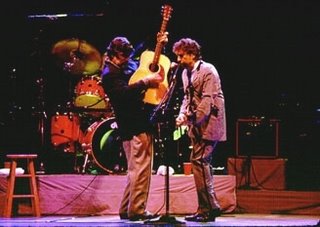
(Rick Danko on stage with Bob Dylan, in one of his last concert)
It’s midnight and everyone is enjoying the dinner and drinking a lot. Everyone is passing the guitar around and singing a song. Alejandro Escovedo introduces a song he just recorded a few weeks before with Willie Nelson. Joe Ely sings Pancho and Lefty as a tribute to Townes. Eric Andersen performs a tender, melancholy Moonchild River Song, one of his old 70’s hits. Rick Danko stood up, took the guitar and shouted: “Hey come on, it’s almost Christmas!” and performed a truly wonderful Christmas Must Be Tonight, the old The Band song. When Rick Danko sing, somebody once said, the angels stop to listen. A foot on a chair, moving and shaking his body in the way Rick Danko always does when he is into a performance. I’m in paradise. I’m waiting for another song from him but he says goodnight to everyone. “Rick, it is only midnight” I say. He laughs. “I’m too old; I need to go to sleep.” And then he is gone. I will never see him again.
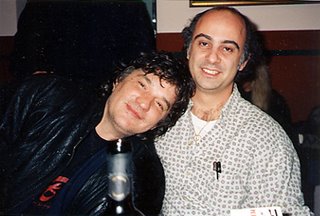
(Thats me and Rick, that night)
Two years later – its almost Christmas time again – I’m on a cold Italian highway taking Eric Andersen to another show. We stop to have a coffee. He needs to make some phone calls. He told me how Rick Danko laughed every time Eric tells him about the picture of me and Rick hanging on my wall at home. “Would you like to say hello to Rick?” he suddenly asks. C’mon, we are an ocean away, please don’t disturb him. He phones somebody. “Here’s Rick, he wants to say hello.” Rick Danko’s voice comes from another planet, but he is laughing, as usual. I can see his usual big smile on his face. He wants to know about my family, if everyone is ok. He always acts like a long, lost friend.
Three years again are gone. It’s a couple of weeks before Christmas. Somebody phones me at work to tell me Rick Danko died last night “while he was sleeping”. It was his birthday. They told me he was happy when he went to sleep, and that his wife found him with a smile on his face. The usual smile he always had, even when he went to prison in Japan for that heroin. They told me he was singing all the time, in prison. He was released because the Japanese judge was a great The Band fan. Nobody could release Rick Danko from the great pain inside of him, the pain of the loss of his 18 year old son who died while at college from a stupid disease. I guess Rick is smiling again, now that he is with his son and his old friend Richard Manuel. I guess Joe Strummer is joining the band too.
Christmas must be tonight.
(thanx to Chris Marcum for editing this)
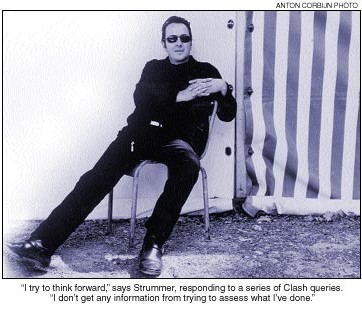
Anyway, December reminds me of the passing of two great men I was lucky to meet and know, shortly, both. One is Joe Strummer. The Clash were for my generation what Bob Dylan was for the 60’s generation, and I was lucky enough to meet him for a damn funny interview one day. At a certain point while we were talking, he took away his boots and the girl who was with me told me: “He did something punk at least…”. Some months later, he was playing in my city. I never saw him or The Clash in concert. David Bowie was playing the same night in a small club. I thought, well, I could go see Joe next time, but David Bowie in a small club. I can’t miss it. There was never a second chance, because a few days before Christmas, Joe Strummer died.
The other man is the subject of the following story.
It was a cold December day when, excited by the news, I walked into that great concert hall with the hope of finally meeting Rick Danko for the first time in my life. He was a true musical hero for me. The music of The Band was a big part of my younger days when I grew up listening endlessly to their music. Of course one of the leading voices of that group was Rick Danko. His performance of It Makes No Difference during the Last Waltz film was the most memorable part of the entire film when I first saw it in 1978.
Now it is 1994 and the rest of the Trio (Eric Andersen, Jonas Fjield and Rick Danko, for the first time in Italy) are there doing the sound check. Rick Danko is not there. They told me he has been locked in his hotel room for two days. They told me he is sick and needs some rest. He will be here later.
When he arrives some hours later, he looks awful. He tries to play the bass, he tries to sing, but he simply cannot. At one moment he throws his bass with anger onto the floor. I’m shocked. I will know the truth some days later.
The concert will not be memorable. The truth is that he was looking for some heroin and was not in good shape because nobody was able to found any.
A week later The Trio tour in Italy is over. The promoter invites some of us to a farewell dinner in a wonderful restaurant by the lake in a small northern Italy town. There are a lot of special guests that night: Townes Van Zandt was here until the day before but now he is gone. I met Townes few days before, he was so lost that it was a painful experience, we only laughed when he told me that outside his hotel room there is a neon light: “Gambling house”. “I can’t be without it, it seems.”
There is Joe Ely and Alejandro Escovedo; there are the rest of The Trio, Eric Andersen and Jonas Fjield. No Rick Danko, though.
During dinner, the entrance door suddenly opens and a large figure with a cowboy hat enters the room. Everyone is suddenly silent. He has a leather jacket with the logo “Allman Brothers Band” on the back. Here is Rick Danko. He is smiling and everyone seems reassured just because he is smiling. He sits at the head of the table. He would not eat very much. He will drink a little, but he is in a great shape, smiling, laughing and talking with everyone. I approach him and it is like he is talking to a long time friend. We talk about the recent The Band reunion show at Woodstock last July for the 25th anniversary of the legendary festival. We talk about the recent Levon Helm biography: “I don’t agree with everything he wrote but it was his book. The world will know all the truth when my book comes out.” He laughs, but that book will never come out. We talk about Bob Dylan and those days in the basement, of course. We talk about Robbie Robertson. He has a good word for everyone. “I don’t care about what people say. I’m grateful for what my life has been. I don’t hate anyone. I love everybody.” Simple as that.
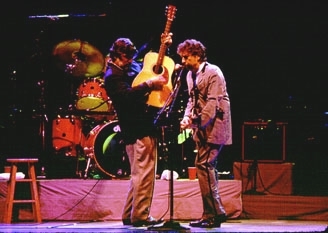
(Rick Danko on stage with Bob Dylan, in one of his last concert)
It’s midnight and everyone is enjoying the dinner and drinking a lot. Everyone is passing the guitar around and singing a song. Alejandro Escovedo introduces a song he just recorded a few weeks before with Willie Nelson. Joe Ely sings Pancho and Lefty as a tribute to Townes. Eric Andersen performs a tender, melancholy Moonchild River Song, one of his old 70’s hits. Rick Danko stood up, took the guitar and shouted: “Hey come on, it’s almost Christmas!” and performed a truly wonderful Christmas Must Be Tonight, the old The Band song. When Rick Danko sing, somebody once said, the angels stop to listen. A foot on a chair, moving and shaking his body in the way Rick Danko always does when he is into a performance. I’m in paradise. I’m waiting for another song from him but he says goodnight to everyone. “Rick, it is only midnight” I say. He laughs. “I’m too old; I need to go to sleep.” And then he is gone. I will never see him again.

(Thats me and Rick, that night)
Two years later – its almost Christmas time again – I’m on a cold Italian highway taking Eric Andersen to another show. We stop to have a coffee. He needs to make some phone calls. He told me how Rick Danko laughed every time Eric tells him about the picture of me and Rick hanging on my wall at home. “Would you like to say hello to Rick?” he suddenly asks. C’mon, we are an ocean away, please don’t disturb him. He phones somebody. “Here’s Rick, he wants to say hello.” Rick Danko’s voice comes from another planet, but he is laughing, as usual. I can see his usual big smile on his face. He wants to know about my family, if everyone is ok. He always acts like a long, lost friend.
Three years again are gone. It’s a couple of weeks before Christmas. Somebody phones me at work to tell me Rick Danko died last night “while he was sleeping”. It was his birthday. They told me he was happy when he went to sleep, and that his wife found him with a smile on his face. The usual smile he always had, even when he went to prison in Japan for that heroin. They told me he was singing all the time, in prison. He was released because the Japanese judge was a great The Band fan. Nobody could release Rick Danko from the great pain inside of him, the pain of the loss of his 18 year old son who died while at college from a stupid disease. I guess Rick is smiling again, now that he is with his son and his old friend Richard Manuel. I guess Joe Strummer is joining the band too.
Christmas must be tonight.
(thanx to Chris Marcum for editing this)


Friday, December 01, 2006
And the nominations are... (oldies but goldies)

How do you drum up interest in a Jerry Lee Lewis record, since the Ferriday Fireball is 71 and hasn't put out an album since 1996? First, you pair him with 22 of the biggest stars of rock (Mick Jagger, Keith Richards), country (Willie Nelson, Merle Haggard), and blues (Buddy Guy, B.B. King), to show how he put his stamp on nearly every genre. Then, you hire the dean of music chroniclers, Peter Guralnick, to give the liner notes heft. And--oh, yes, you also make sure the piano-pounding pioneer displays the best finger form he's shown in 25 years. Throughout, the Killer crows, struts, and self-mythologizes with the brio of youth, and who could resist him? At times, one may question the wisdom of turning an obvious guitar tune (Led Zeppelin's "Rock and Roll") into a piano-dominated performance, just as it seems odd to not make the best use of such guests as Toby Keith or Delaney Bramlett. But Lewis never yields the throne for a second, even surrounded by the likes of Robbie Robertson, Neil Young, and Eric Clapton. For that reason, most of these aren't true duets--the star instrumentalists take their solos, and the harmonies of some of the most legendary vocalists (Don Henley, Little Richard) stay too far in the background. But when things really work--as they do with Bruce Springsteen (the rave-up "Pink Cadillac"), Neil Young (a crackling rendition of "You Don't Have To Go"), Kid Rock (an even blacker "Honky Tonk Woman"), George Jones (the novelty-framed "Don't Be Ashamed of Your Age"), and Kris Kristofferson (an especially poignant take on "The Pilgrim: Chapter 33"), the rock of ages cleaves for thee and me. Last Man Standing refers to the famous cover of Million Dollar Quartet, on which he's pictured with fellow Sun artists Elvis Presley, Johnny Cash, and Carl Perkins, all now jamming in the great beyond. Yet in a spoken-word reprise at the end of the Kristofferson song--"From the rocking of the cradle / To the rolling of the hearse / The going up was worth the coming down"--the Last Man seems to suggest his own fine epitaph. It's hard to argue with a hellraiser extraordinaire.

Three decades after decisively trading fame and his superstar moniker for the spiritual devotion for which his restless '70s songs seemed a perpetual quest, the singer-songwriter born Steven Demetre Georgiou has successfully resurrected Cat Stevens's muse, if not his persona. The musician whose dedicated embrace of Islam embroiled him in controversy frequently sings its praises on An Other Cup, both boldly (the Prophet-lionizing "The Beloved") and with delicate reflection ("Whispers from a Spiritual Garden" reworks Sufi mystic Jalaluddin Rumi.) Given the political and religious misconceptions that have often plagued him, he's mused for years that his theme song should be Nina Simone's "Don't Let Me Be Misunderstood"; here Yusuf makes good on the promise, conjuring a cover steeped in brooding elegance with the assistance of Madonna/Dido/Rod Stewart producer Rick Nowells.
Yet, as "Heaven/Where True Love Goes" attests, the musician remains as masterfully adept at blurring distinctions between spiritual and romantic ecstasies as he is at evoking his trademark idealism in the lilting harmonies of "Maybe There's a World." Fans of his vintage catalog will find intriguing riches outside the more spiritually focused works here, too, with the familiar idealism of the previously unrecorded 1968 song "Green Fields, Golden Sands" and muscular "I Think I See the Light" further evoking the glories of Cat past. The production leans towards the spare and shrewdly contemporary, whether casting the effusive opener "Midday" in Paul Simon's spirit of cross-cultural adventure, underscoring the melodic charms of "One Day at a Time," or suffusing "When Butterflies Leave" and his autobiographical cover of Simone with graceful, neo-classical strings. Considering the career time lapse, it's a remarkably strong effort, yet one inspired by a gentility and spiritual inquisitiveness that's comfortably familiar.
Monday, November 27, 2006
And the nominations are... (you cant go wrong with these two)
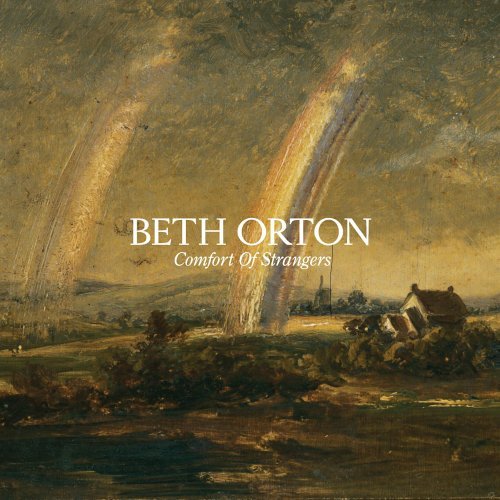
BETH ORTON – COMFORT OF STRANGERS
Few vocalists equal the expressive subtlety of Beth Orton, whose fourth album is both her most musically spare and artistically complex to date. Not only does the production and backing by Jim O'Rourke (known for his work with Sonic Youth and Wilco) capture Orton's vocal style at its most unstudied and unvarnished, the lack of embellishment focuses all the more attention on her songwriting. From the jazzy phrasing on the deceptively jaunty "Worms" through the haunting "Feral" and the amazing grace of the closing, hymnlike "Pieces of Sky," Orton's songs give voice to the sort of knotty, prickly emotions that are as hard to define as they are deeply felt. Most of the musical dynamic features piano or guitar over an elemental, insistent rhythm section, making the coloring of an occasional string section ("Conceived"), harmonica ("Absinthe"), or accordion ("Safe in Your Arms") all the more striking. As an indication of the emotional range of this musical minimalism, the title cut is soothing enough to please fans of Norah Jones, while "Heartlandstruckstop" is as edgy as Patti Smith.
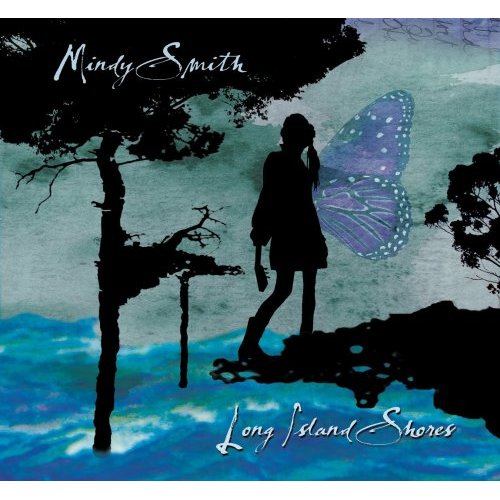
MINDY SMITH – LONG ISLAND SHORES
With her expressively breathy vocals and uplifting melodies, Mindy Smith expresses both the romantic and spiritual dimensions of rapture. It can occasionally be hard to tell whether Smith is singing of God or love, or if she even makes a distinction between the two. Whether she's invoking prayer and sin in the opening "Out Loud," hoping that God's looking out for her in "Out of Control," casting a seductive charmer as a "Little Devil," or recalling her preacher father in the title track, Smith's material blurs the distinction between the earthly and the ethereal. Her duet with kindred spirit Buddy Miller on "What If the World Stops Turning" highlights the album, though the Nashville-based artist rarely hints at country within her buoyant brand of folk-pop.
Friday, November 24, 2006
And the nominations are... (the winner?)

For years, for any Neil Young fan, this recording was what for any Bob Dylan fan the legendary "Royal Albert Hall 1966" bootleg was (which, in fact, as we all know, was recorded at the Free Trade Hall in Manchester and not at the Royal Albert Hall).
The Neil Young bootleg recording of his concert at the Fillmore East in 1970 was widely circulating for decades, as well was the Bob Dylan bootleg: two artists at the peak of their musical power and artistic genius.
Now, the Neil Young and the Crazy Horse at the Fillmore East is out in the official way, as it was for Bob Dylan 1966 concert some years ago.

The sound quality is shocking great, and the devasting force, I'd say the brutal garage violence of Neil Young and his band in the mid of the flower power era, is stunning. "I shot my baby", Neil Young sing while everybody were singing that "music is love" and "put a flower in your hair".
Dark, raw and sonically scaring, this is Neil Young at his best.
Wednesday, November 22, 2006
And the nominations are... trippin' the live fantastic!
My Morning Jacket is an incredible band, way much better on stage than in studio, tho. This live album is like mixing the late 60s Grateful Dead, the early 70s The Band and the early 90s Pearl Jam. Pure cosmic music.

T-Bone Burnett is probably the best american producer of the last 20 years, He is also a brilliant songwriter, tho his voice is not so good. Nevermind: this album is a festival of great songs, from rockabilly garage music to the folk tradition to 50s pop, and his production-sound is what Bob Dylan should try these days. Just amazing.


T-Bone Burnett is probably the best american producer of the last 20 years, He is also a brilliant songwriter, tho his voice is not so good. Nevermind: this album is a festival of great songs, from rockabilly garage music to the folk tradition to 50s pop, and his production-sound is what Bob Dylan should try these days. Just amazing.

Monday, November 20, 2006
And the nominations are... B & B
Which, of course, stand as Bruce & Bob.
Two giants, two legends. Two albums that are, in fact, quite disappointing. While Bruce Springsteen is surely an interesting project, anyone who saw the Seeger Sessions Band in concert would agree that live, these songs are ten thousand times better than as they are in this studio version. I can only name the terrific "Shenandoah" as the really worthwhile track here, a majestic song that remind of the pure american spirit of group like The Band. The rest, after a while, is honestly a little too much of a school exercise.
And what can you say about Bob Dylan? He is the master. He is.... a man that cant do no wrong. Well, except that in what is his first album of new songs in five years he hardly wrote any song, maybe a couple, the nice Workingman's Blues and the interesting Ain't Talkin'. The rest was already written by a long list of bluesmen, old folksingers, even an old rock'n'roll glory like Chuck Berry. Even the lyrics it seems were already written by a XIX american poet, Henry Timrod, and even the latin poet Ovid. If you like it this way.... Not a bad album, not a masterpiece tho. Another school exercise.

Two giants, two legends. Two albums that are, in fact, quite disappointing. While Bruce Springsteen is surely an interesting project, anyone who saw the Seeger Sessions Band in concert would agree that live, these songs are ten thousand times better than as they are in this studio version. I can only name the terrific "Shenandoah" as the really worthwhile track here, a majestic song that remind of the pure american spirit of group like The Band. The rest, after a while, is honestly a little too much of a school exercise.

And what can you say about Bob Dylan? He is the master. He is.... a man that cant do no wrong. Well, except that in what is his first album of new songs in five years he hardly wrote any song, maybe a couple, the nice Workingman's Blues and the interesting Ain't Talkin'. The rest was already written by a long list of bluesmen, old folksingers, even an old rock'n'roll glory like Chuck Berry. Even the lyrics it seems were already written by a XIX american poet, Henry Timrod, and even the latin poet Ovid. If you like it this way.... Not a bad album, not a masterpiece tho. Another school exercise.

Tuesday, November 14, 2006
Dio verrà a prenderti
God’s gonna cut you down: il linguaggio è – volutamente – estremo. Ma con argomenti così seri come lo sono Dio e la morte, è giustificabile, E poi è un linguaggio tipicamente americano, come profondamente americano era l’interprete del brano, e l’interprete del brano è uno che non amava scherzare. “Ho ucciso un uomo solo per vederlo morire” cantava da giovane. Lui è Johnny Cash, e questo – bellissimo – videoclip è il nuovo video in rotazione da pochi giorni su Mtv America (chissà se arriverà mai nella nostra stupidissima Mtv Italia).
Nel video appare una lunga lista di celebrità (36 in tutto) e il significato del filmato è chiaro: la redenzione è possibile (una volta, durante un concerto, Johnny Cash - che nella vita ne aveva fatte di cotte e di crude -, disse: “Se sono su questo palco stasera, è la prova che la redenzione è possibile”) anche per chi è stato all’inferno.
Infatti i protagonisti del video non sono stati scelti a casi. Sono tutti stati all’inferno: dall’ex eroinomane incallito (Iggy Pop) all’ex alcolista all’ultimo stadio (Kris Kristofferson), dalla super star di Hollywood caduta negli abissi (Dennis Hopper) alla rock star assoluta (Bono), alla donna che ha sofferto la morte di marito e fratelli (Patti Smith), quella che si è salvata dal cancro (sheryl crow) alla top model cocainomane (Kate Moss) a quello che si è fritto il cervello con l'LSD (la droga che doveva aprirci le porte della conoscenza...) come Brian Wilson, o la cantante Shelby Lynne, i cui genitori si suicidarono entrambi. E ovviamente Keith Richards, quello che ha un flirt con il demonio da tutta la vita... Gente che sa una cosa o due a proposito dell'inferno.
Appaiono due sole parole, qua e là nel video: “Redemption” e “Sin”, redenzione e peccato.
Sì, la redenzione è possibile: "Sicuro come Dio ha fatto il nero e il bianco, quello che c’è nell’oscurità ti farà anche conoscere la luce". Attento, perché alla fine della tua storia, Dio ti farà a pezzi. Nel senso che da lì non si sfugge, ci devono passare tutti e tutti devono fare i conti con Lui. Parola di Johnny Cash: "Puoi correre a lungo" canta "ma alla fine Dio verrà a prenderti".
dal Vangelo secondo Luca Cap. 3 : (parla Giovanni battista):
"Even now the axe is laid to the root of the trees; every tree therefore that does not bear good fruit is cut down and thrown into the fire."
Sunday, November 12, 2006
avviso ai naviganti
Il sito dedicato al promoter Bill Graham - vedi link nella sezione link di questo blog - è stato aggiornato con una nuova sezione - http://concerts.wolfgangsvault.com/ - che trovate al link Concerts all'interno del sitos tesso, che permette di ascoltare in qualità perfetta più di 300 concerti integrali risalenti alla golden age del rock'n'roll, dal 1967 a fine anni 70.
La grande musica è tutta qui: chi ha bisogno di comprare l'ultimo disco di Damien Rice quando si possono ascoltare gli Who nel 1967 al Fillmore o The Band a Los Angeles nel 1974?
Enjoy!
La grande musica è tutta qui: chi ha bisogno di comprare l'ultimo disco di Damien Rice quando si possono ascoltare gli Who nel 1967 al Fillmore o The Band a Los Angeles nel 1974?
Enjoy!
Wednesday, November 08, 2006
That weird old America
The most common slogan used by the Democrats during this mid-term american election was: “The Republicans are not the real America. They are not part of the real people. Thye’re not close to the real people of America”.
Really?
Is interesting to note that, to win this election, the Democrats were forced to use as candidates many former Republicans and many Democrats that are against abortion or that are very religious (check Hilary Clinton speeches during this campaign). Why? Because, it seems, the majority of the Americans are still people who believe in certain “traditional” values as religion etc, as the two times victory of George W Bush shows.
Now, you might not like that, but it shows that the Republicans are “the real American people”, you like it or not. The real America is not the imaginary America that the New York Times propaganda is trying to sell from 40 years now, the “Sex and the City” tv soaps kind of America they like so much, the New York Times anti – Christian propaganda that not even the afghan talibans would do (check the recent New York Times attack to the Pope), an imaginary America they want so hard even if the majority of the Americans dont care about it.
Bye bye miss American pie?
Subscribe to:
Posts (Atom)
I più letti
-
 E ci sono state le lacrime e c’è stata una stella cadente che ha attraversato il cielo aprendosi in due. E ci sono state preghiere e c’è sta...
-
 "Edward Hopper, pittore statunitense famoso soprattutto per i ritratti della solitudine nella vita americana contemporanea". Oibò,...
-
 L'altra sera sono andato a vedere il concerto di Bruce Springsteen And The E Street Band. Ogni volta che viene in Italia non me lo perd...
-
Nick Hornby, in tutte le top five del suo (peraltro bello) Alta fedeltà, naturalmente non ha incluso la top five delle migliori fuck you son...
-
 This blog for hire , come diceva il musicista rock più amato in questo blog... Così oggi lascio spazio all'amico Giorgio Natale , con cu...
-
E' una giornata di sole oggi a Los Angeles. D'altro canto a Los Angeles c'è sempre il sole. L'anziano signore, sempre elegan...
-
 Paolo Vites, giornalista musicale da circa 25 anni, ne ha visti di concerti. Dai primi, a fine anni 70, quando la musica dal vivo tornò a es...
-
“Bob Dylan è in città, c’è bisogno di catturare qualcosa di magico”. La “città” è ovviamente New York, al telefono John Hammond, il più gran...
-
“Ogni sera c’è del rossetto sulla sua camicia, ogni mattina lei lo lava via. Aveva sentito dire che in ogni vita una parte della vita stessa...
-
 Quello che è successo a Parigi la sera del 13 novembre, a molti di noi appassionati di musica rock ci ha segnato per sempre. Non perché un r...

